
This article chronicles the evolution of Anthem Room Correction (ARC®) from its origins in the NRC/CARC Athena project to today’s powerful ARC Genesis platform. Decades of research, advanced algorithms, and precision engineering shaped ARC into a leading room-correction system used across Anthem, Paradigm, and MartinLogan products. From early calibrated-mic systems and dual profiles to ARC-2, PBK, and ARC Mobile, each generation expanded capability and accuracy. ARC Genesis now delivers the most advanced, flexible, and natural-sounding room optimization yet—continuing Anthem’s ongoing commitment to pushing the boundaries of audio science.Table of Contents
Advanced Room Correction, Simplified by Anthem
A dedicated team of Ph.D. engineers and researchers set out to tackle the complex acoustic challenges that rooms impose on sound. They meticulously analyzed the way speakers interact with every surface, corner, and boundary in real-world listening environments. The protocols and algorithms they developed didn’t just solve common problems — they redefined what room correction could achieve, setting a new global standard. Today, their work powers ARC Genesis, delivering precision, clarity, and lifelike sound that transforms any space into a world-class listening environment.
The Genesis of Room Correction
Long before digital signal processing, there was analog equalization. Before that, there was acoustic treatment. And long before any of that, there were the caves and natural spaces where humans first began to contemplate sound — the beginnings of our fascination with acoustics. As civilizations evolved, so did our architecture: Roman amphitheaters, soaring cathedrals, grand concert halls, and eventually recording studios and sound stages, all carefully designed to manage how sound behaves in a space. These techniques eventually made their way into private listening rooms in the form of acoustic treatments — effective, but often expensive and visually intrusive.
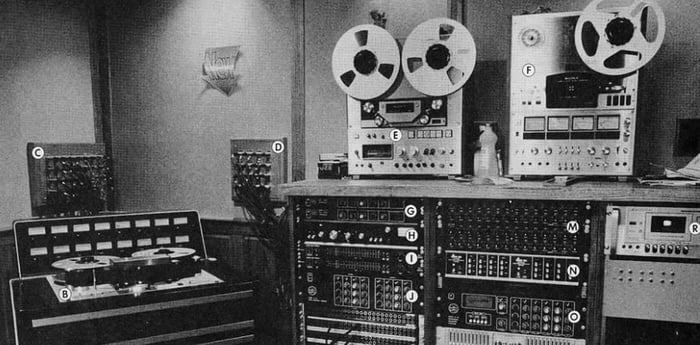
Early audio engineers sought a different path. Using an understanding of human hearing and the behavior of sound, they measured frequency response in rooms and created rudimentary analog equalization circuits to compensate for acoustic shortcomings. Innovative for the era, these solutions were limited in scope, difficult to implement, and often introduced new issues that affected sound quality.
With the rise of computers and digital audio in the late 1980s and early 1990s, a new frontier opened. The National Research Council (NRC) partnered with the Canadian Audio Research Consortium (CARC) to launch a focused initiative: the Athena project. A dedicated team of Ph.D. engineers and researchers, armed with the latest knowledge in psychoacoustics and sound reproduction, set out to understand and mitigate the adverse effects of rooms on audio. Partially funded by Paradigm and other Canadian consumer electronics manufacturers, the Athena project pushed room correction technology to unprecedented heights.
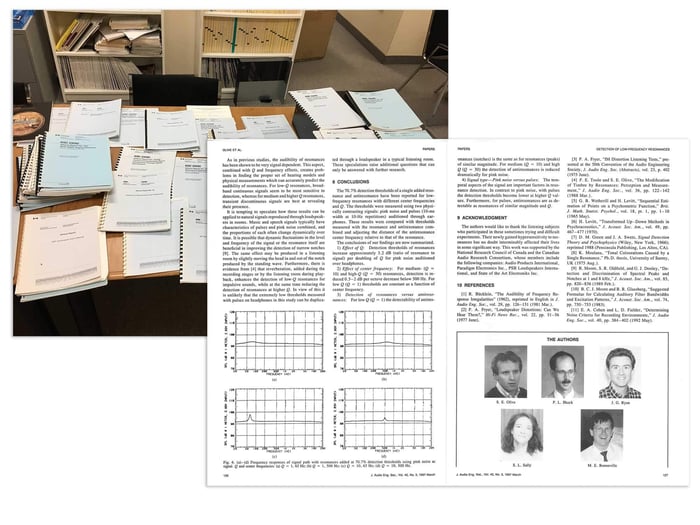
At the conclusion of the project, the Athena team had developed world-class protocols and algorithms, along with CARC processor boxes and software capable of precise room measurements and digital signal processing. These tools included multiple D/A and A/D channels, Motorola DSP56000 processors, a digital audio crossbar, and other cutting-edge features necessary to implement advanced room correction.
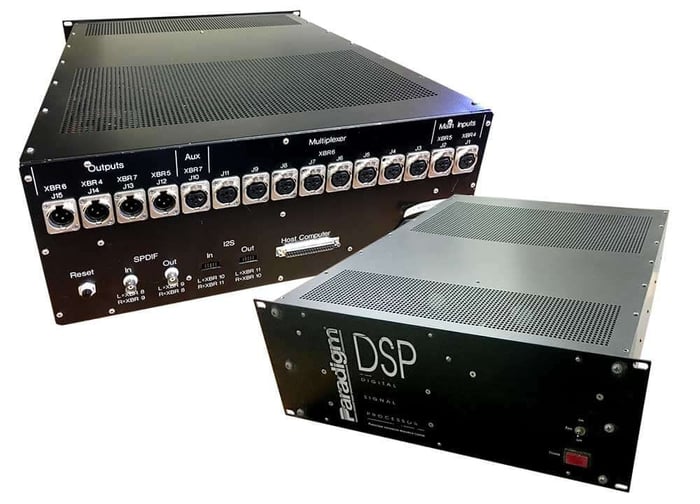
Recognizing the opportunity to continue this work, Paradigm hired several of the Athena project’s top scientists, including Peter Schuck, Ph.D., who developed the algorithms and wrote much of the software, and Marc Bonneville, who engineered the electronics for the CARC boxes. In 1993, Paradigm opened a dedicated research facility in Ottawa, Ontario — PARC (Paradigm Advanced Research Center). For over 30 years, PARC has served as a state-of-the-art laboratory for electronics design, DSP programming, and the development of advanced audio technologies, forming the foundation for what would become Anthem Room Correction.
From Concept to Reality
In 1998, Paradigm acquired Anthem Electronics (formerly part of Sonic Frontiers), bringing a new brain trust of scientists and engineers into the fold. At PARC, this team began expanding Anthem’s offerings beyond 2-channel systems, designing innovative high-end electronics for home theater. These products would become the first to incorporate Anthem Room Correction (ARC) — the practical realization of the Athena project’s groundbreaking research — debuting in the state-of-the-art Anthem D2v home theater processor.
The Athena project remains the gold standard in room correction research. While other companies have developed digital room correction systems, many build on either the Athena project’s insights or earlier research that Athena had already refined. Today, Anthem Room Correction is the only solution that traces directly to the Athena project, with original team members continuing to push the boundaries of research, refine their expertise, and design practical, high-performance solutions for real-world listening environments.
ARC-1: Anthem Room Correction Makes Its Debut
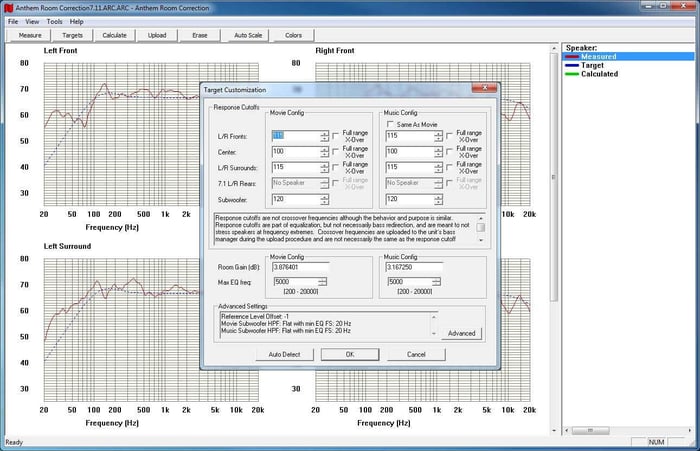
When Anthem Room Correction (ARC) first debuted in March 2008, it was exclusively available for Anthem’s flagship Statement D1 and D2 audio/video processors. Soon after, support expanded to the AVM 40 and AVM 50 processors, and by 2010, ARC compatibility included the AVM 50v processor and first-generation MRX 300, 500, and 700 receivers. Even select legacy products benefited from hardware upgrades. Designed with audio professionals in mind, the original ARC interface offered a wide range of options for fine-tuning a system’s in-room performance. At launch, ARC relied on RS-232 connections and was limited to Windows PCs.
From the beginning, ARC set new standards in precision room correction. Anthem engineers recognized that accurate measurements require a calibrated microphone. Every mic shipped with ARC was individually measured, serialized, and paired with a calibration file, ensuring the software could account for any deviations when calculating DSP corrections — a principle that remains fundamental to ARC today.
ARC also introduced a first-of-its-kind dual-profile system, allowing users to create multiple correction scenarios. For example, one profile could be tailored for two-channel listening without a subwoofer, while a second could implement full bass management for home theater, including speaker/subwoofer crossovers. Settings in each profile were fully customizable and could be switched on the fly.
Later updates added Quick Measure, transforming ARC into a real-time RTA analyzer. This powerful tool allowed users to visualize individual speaker and subwoofer responses, making it easier than ever to fine-tune placement, adjust subwoofer controls, and optimize the entire system.
PBK (Perfect Bass Kit) – Intelligent Bass, Perfected
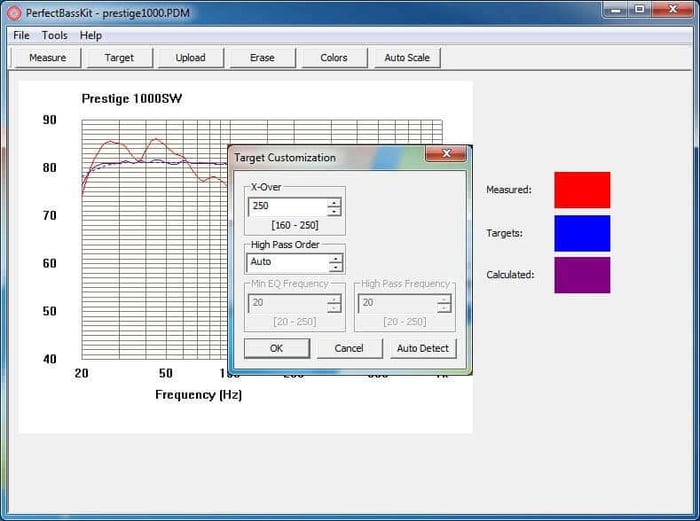
Shortly after, sister company Paradigm Electronics introduced the Paradigm PBK (Perfect Bass Kit). Built on principles similar to ARC and compatible with select Paradigm subwoofers, PBK provided dedicated room correction for Paradigm’s flagship subwoofers. Later, MartinLogan, another Anthem sister brand, released MartinLogan PBK, a stand-alone version designed for three of their subwoofer models.
ARC-2: Advancing the Art of Sound
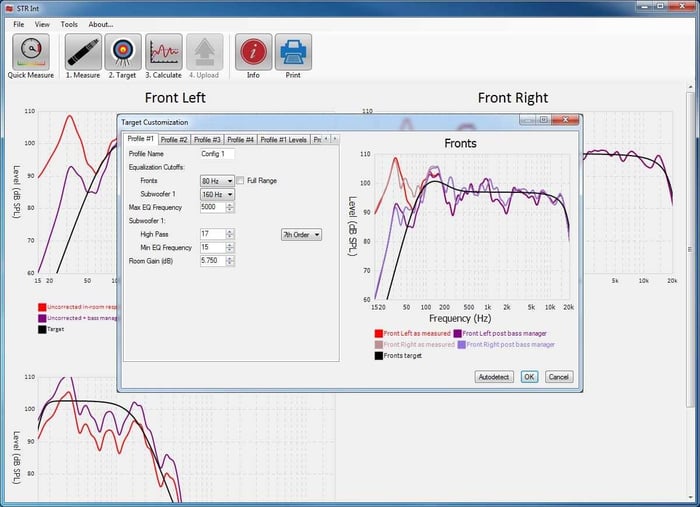
The launch of ARC-2 in 2014 coincided with the release of Anthem’s second-generation MRX 310/510/710 receivers and AVM home theater processor. This new version combined the capabilities of ARC and PBK into a single software platform, eventually supporting dozens of products across Anthem, MartinLogan, and Paradigm. Moving beyond the outdated RS-232 connection, ARC-2 introduced Ethernet and Wi-Fi connectivity, with later updates adding USB support for select devices.
ARC-2 also brought a host of user-friendly features, including an automatic wizard mode that simplified room correction setup for novices, while retaining the precision and flexibility that professionals demand. With the introduction of the AVM 60 processor and third-generation MRX 520/720/1120 receivers, ARC-2 expanded the number of configurable profiles to four and introduced multiple measurement sets—ideal for rooms with predictable acoustic variations, such as a drop-down video screen deployed for movies versus hidden for music.
Later updates added the Curve Viewer, allowing users to analyze measurements and corrections in detail before and after ARC, giving full transparency into the changes and improvements being applied to the system.
ARC Mobile: Full ARC Control, Right in Your Hand
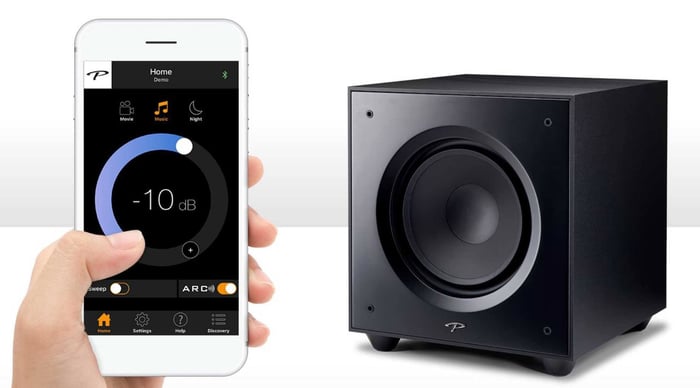
In 2016, ARC Mobile debuted, bringing the power of Anthem Room Correction to iOS and Android devices. Designed for simplicity, ARC Mobile offers a fully automated mode, making it easier than ever to implement ARC corrections. Initially, the app connected only to products on a local area network, but later updates added Bluetooth support for select MartinLogan and Paradigm subwoofers.
ARC Mobile can use a mobile device’s built-in microphone or a dedicated Anthem Universal Microphone for even more consistent performance. This new microphone features both USB and 3.5mm analog connections, and, thanks to Anthem’s rigorous manufacturing standards, ensures tight, predictable response tolerances. With this innovation, Anthem eliminated the need for individual microphone calibration files, simplifying the process while maintaining precision.
Please note: ARC Mobile was officially discontinued in 2025 and is no longer supported. While existing installations may continue to function, no further updates, technical support, or troubleshooting will be provided. We encourage users to transition to our current room correction solutions to ensure ongoing compatibility and the best performance.
ARC Genesis: The Future of Room Correction
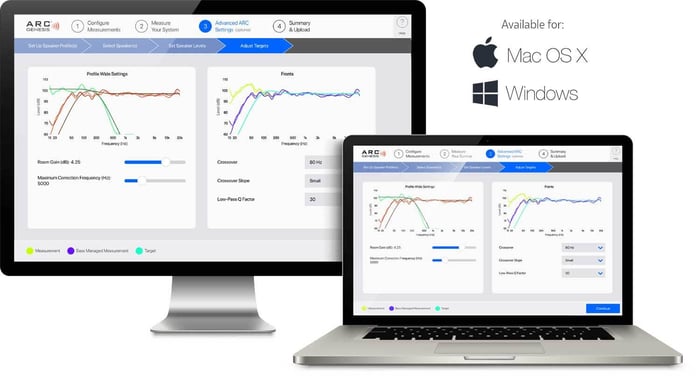
Launched in 2019, ARC Genesis represents a bold leap forward in digital room correction. Completely redesigned from the ground up, it is compatible with all ARC and PBK-enabled products, past and present, except those relying solely on RS-232 connections. This includes legacy subwoofers that previously depended on older versions of Paradigm PBK or MartinLogan PBK software.
ARC Genesis also supports every ARC, Paradigm PBK, and MartinLogan PBK microphone ever manufactured and is available in identical versions for both Windows and Mac. Whether you prefer a desktop, laptop, or mobile device, ARC Genesis has you covered.
The most powerful ARC ever, ARC Genesis combines Professional and Auto modes to make professional-level room correction both simple and precise. Enhanced optimization algorithms and expanded control over target curves give advanced users unmatched flexibility. For large, multi-channel systems, ARC Genesis also introduces the ability to remeasure individual speakers, making fine-tuning subwoofers and complex speaker setups faster and more accurate than ever.
Always Innovating
At Anthem, the story of ARC is far from finished. Our team of engineers and audio scientists is constantly experimenting, testing new algorithms, and exploring the frontiers of digital room correction. Every project, every measurement, every breakthrough drives us to refine ARC even further, ensuring it remains the industry-leading solution for accurate, natural, and powerful sound in any space. With ARC, the pursuit of perfect sound is ongoing — and we’re committed to staying ahead.